
Redefining Premium Content: Why Authenticity Is the New Production Value
“Premium” content was once judged largely by what appeared on the screen. Bigger crews. Better cameras. Elaborate lighting. Expensive locations. Highly produced visuals.
After spending the better part of two decades telling stories around the world, I believe the definition of premium content is changing.
Those traditional markers of quality still matter, and at Two Doors Down Productions, we care enormously about our craft. We want every frame to feel considered, every interview to sound exceptional, and every film to have a cinematic quality that reflects the brands that trust us with their stories.
But today, beautiful isn't enough.
Audiences are surrounded by polished content. Technology has made sophisticated production more accessible than ever, and AI is accelerating that shift even further. While creating something that looks premium is getting easier, creating something that actually makes someone stop, listen, and care is becoming increasingly more difficult.
That’s why we're building Two Doors Down around a different definition of “premium.”
Premium content should feel human before it feels produced.
We Start With the Person, Not the Brand
Some of our strongest work begins by temporarily putting the brand aside.
We need to understand a client’s objectives and key messages. But when we walk onto a location, we don’t want the person we’re profiling thinking about talking points. We want them thinking about their life, experiences, and what matters to them.
That philosophy has shaped the work we’ve recently been creating with Meta. In Lincoln, Maine, we traveled to tell the story of Gather, a small business rooted in its community. The opportunity wasn't simply to create a film about how a business uses Facebook or Instagram. It was to understand the people behind the business, why Gather exists, and what it means to the community.
Meta is part of the story, but the human story comes first.
We've taken the same approach recently while filming workforce development stories in Indianapolis. Rather than beginning with statistics and predetermined corporate messaging, we spent time with the people actually experiencing the program. We wanted to understand what gaining new skills and new opportunities meant to their lives.
That's where a corporate initiative stops feeling like corporate content and starts becoming something people can connect with.
Our philosophy remains the same across industries: Find the human story first, then determine where the brand belongs within it.
finding the story behind the partnership
Another example is the storytelling we’ve developed around Blue Owl Capital’s partnership with professional golfer Xander Schauffele.
On the surface, you might look at the relationship and see a traditional sports sponsorship. Xander is one of the world's elite golfers, and Blue Owl is a global alternative asset manager. The obvious approach would be to build content around the sponsorship itself.
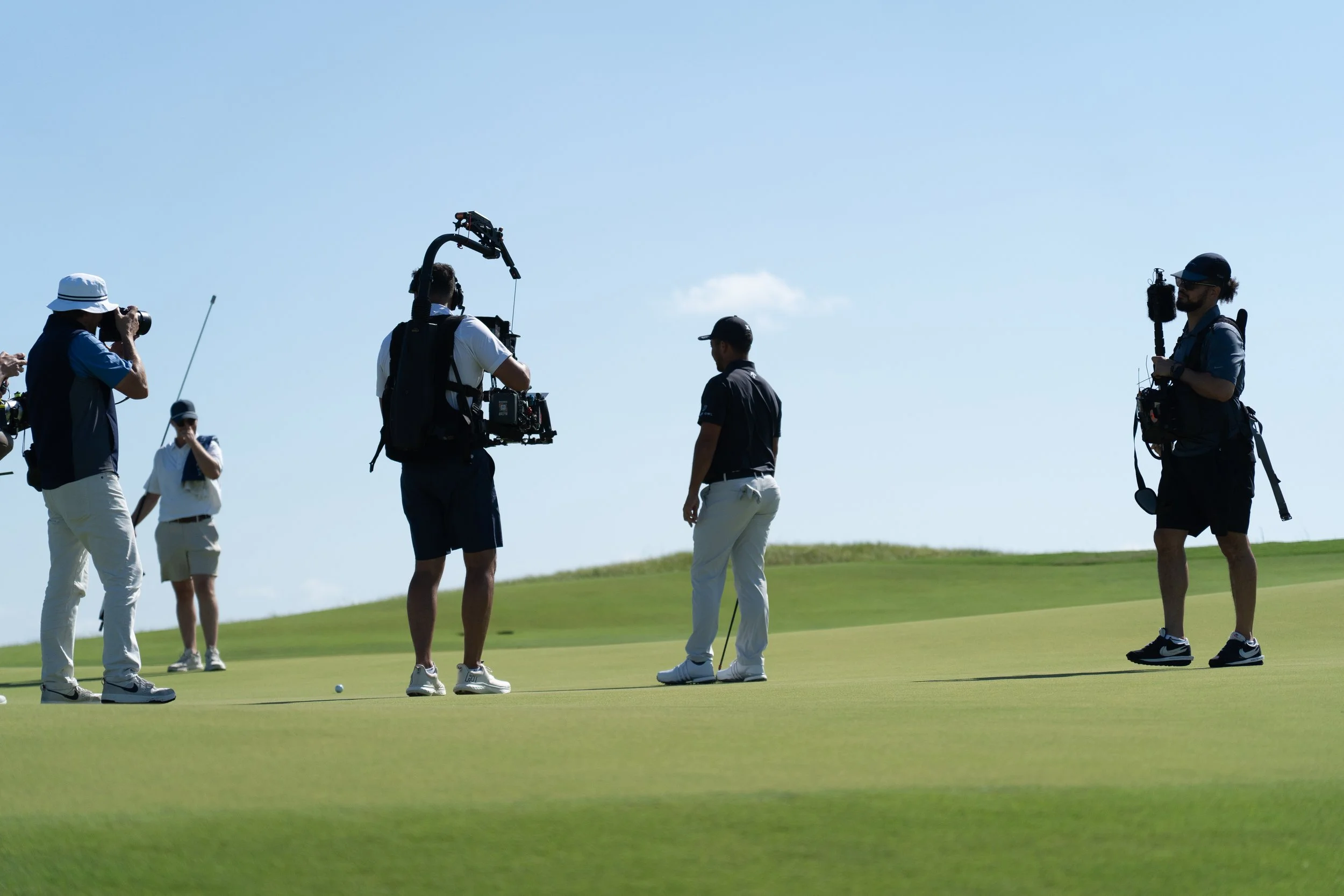
We saw a much more interesting opportunity.
Blue Owl's partnership with Xander is rooted in shared values: vision, discipline, meticulous preparation, and a long-term approach. Those are qualities that define an elite athlete, but they're also qualities Blue Owl wants associated with the way it approaches its business. That gave us a storytelling foundation.
Rather than simply putting Xander in front of a camera and asking him to deliver brand messaging, our goal was to capture the mindset behind the athlete. The preparation. The repetition. The precision. The details that most people never see.
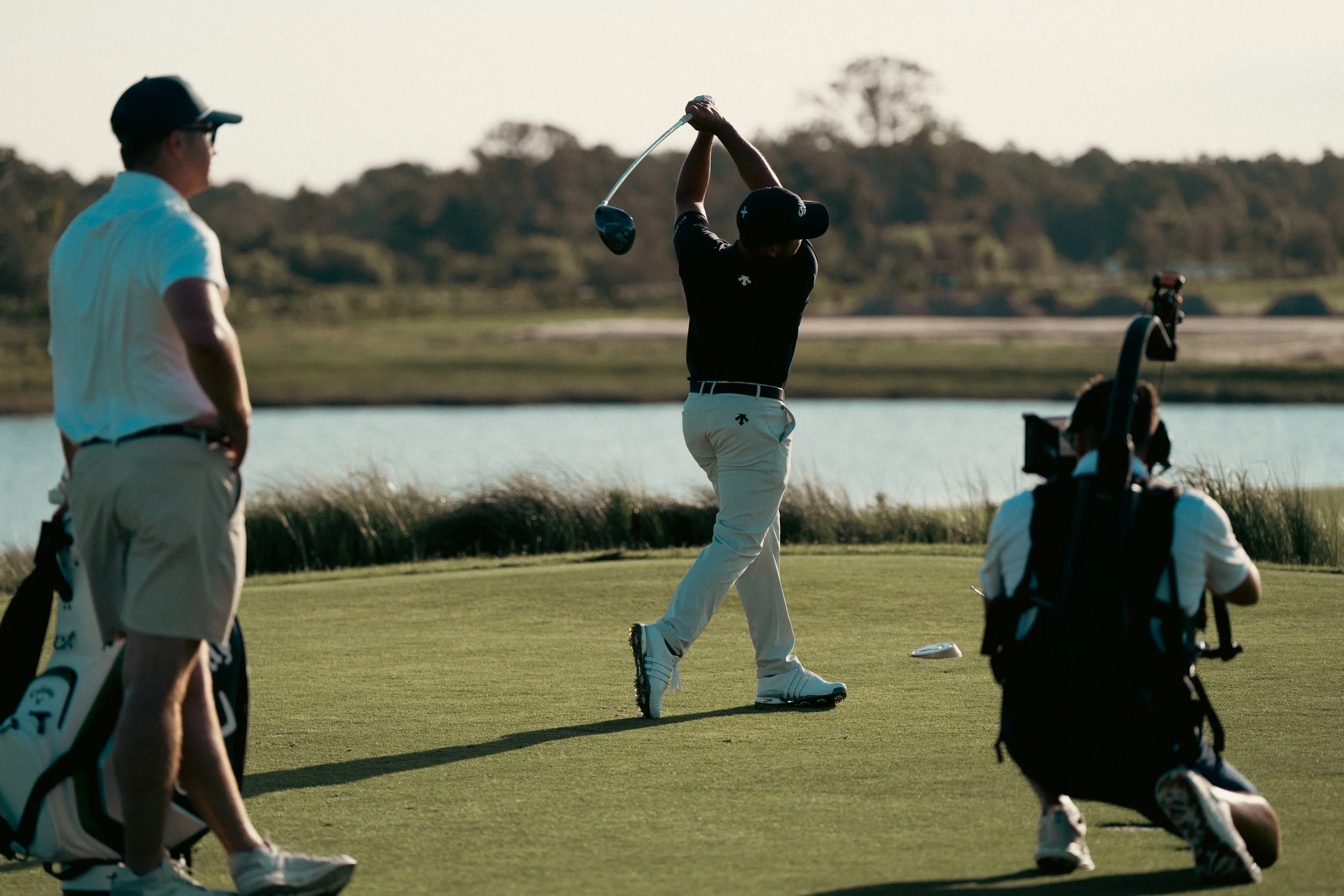
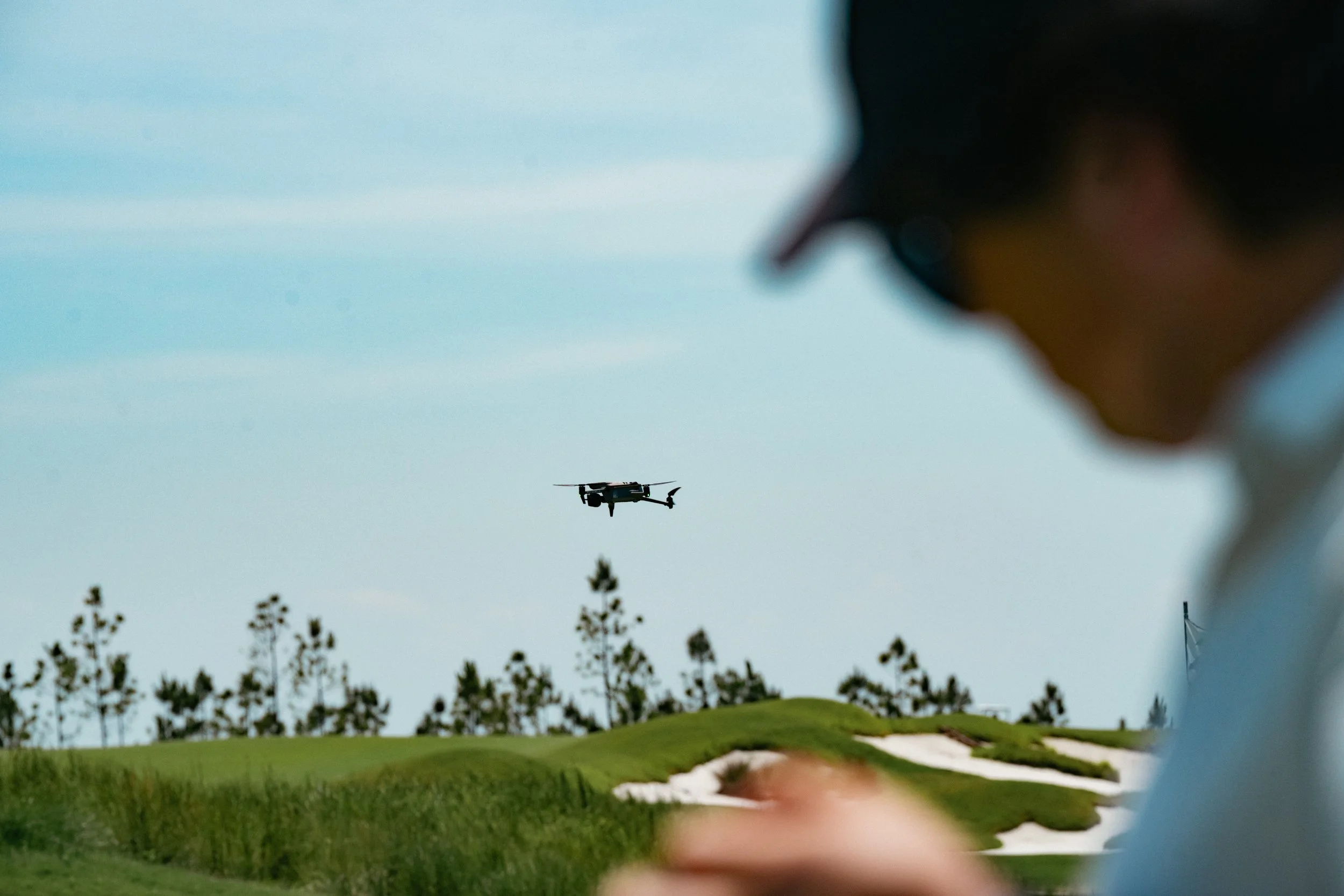
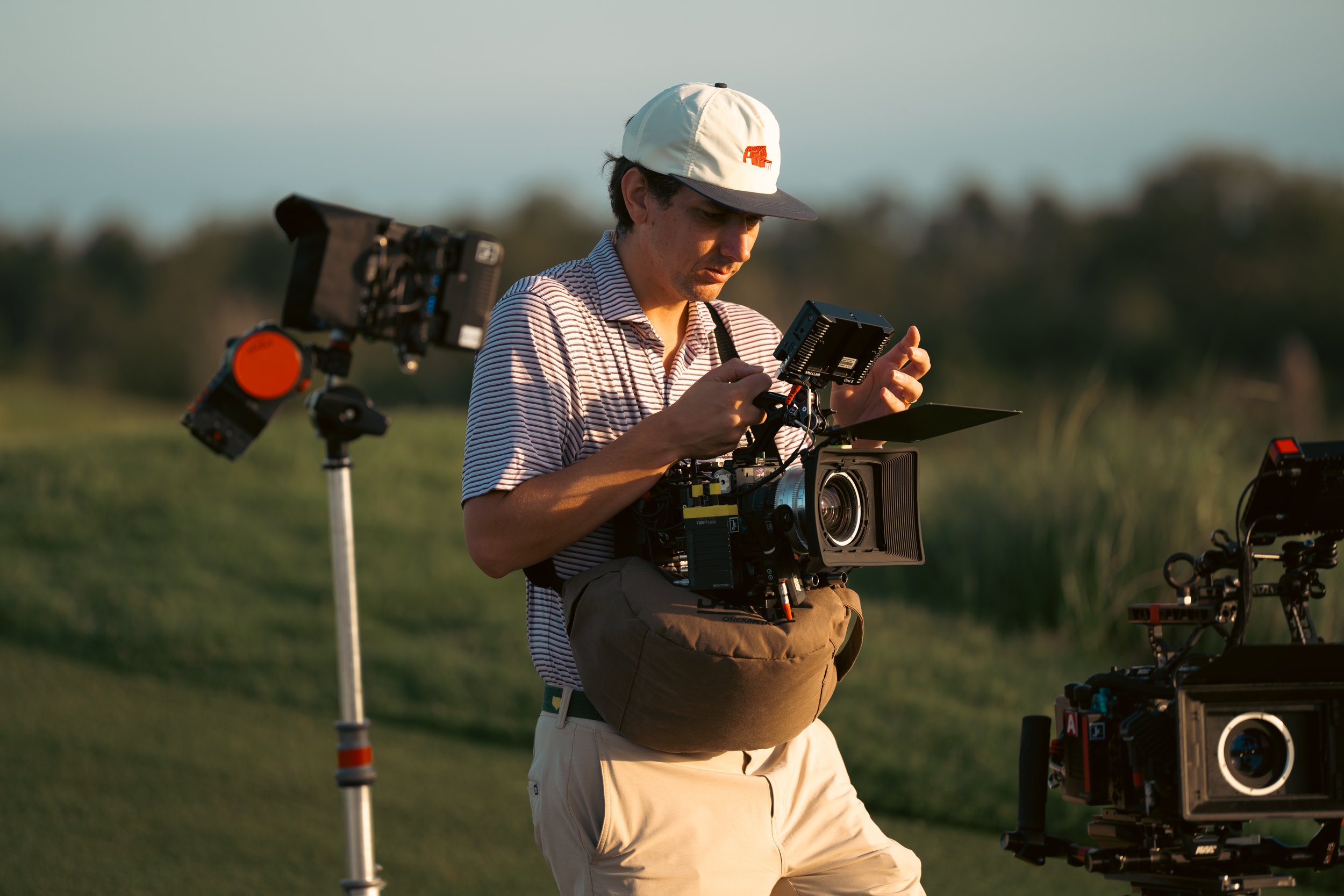
That's where premium storytelling becomes powerful. The audience doesn't need to be repeatedly told what Blue Owl stands for. They can begin to feel it through the person the brand has chosen to associate itself with. The connection becomes emotional rather than transactional.
A sponsorship says, “This person represents our brand.” A great story allows the audience to understand why.
Premium Means Going Further
Our approach also means being willing to go wherever the story takes us.
Over the years, our crews have filmed across the United States and around the world. We've worked inside both major corporate headquarters and small businesses. We've also filmed inside San Quentin State Prison, in communities across Rwanda and Kenya, aboard fishing boats in Alaska, and inside small-town gyms throughout rural Missouri.
Those experiences have reinforced something we believe strongly: access and trust are production value.
Relationships Create Moments THAT Cameras Can't
One of the biggest lessons we've learned is that the quality of the relationship behind the camera directly affects what happens in front of it. People know when you're genuinely listening.
We approach interviews as conversations. We research extensively, but we don't want preparation to eliminate discovery. Sometimes the answer we never expected becomes the emotional center of the entire film.
That philosophy extends to our documentary Heartwood, which we've been filming in rural Missouri. The film centers around a nearly century-old Thanksgiving basketball tournament and the communities of Arcadia Valley and South Iron that have carried that tradition through generations.
We could have arrived for several days, filmed the tournament and left with a compelling sports film. Instead, we keep going back.
We've spent time with players, coaches, families, and community members across different seasons. We're learning what basketball means there beyond the scoreboard. The longer we spend in these communities, the less the film becomes about a basketball tournament and the more it becomes about tradition, identity, family, and the passage of time.
That depth cannot be manufactured in post-production. It comes from relationships.
Bringing a Documentary Mindset Into the Corporate World
This is really where we believe Two Doors Down is redefining what premium means.
We are taking the mindset we use to make independent documentaries and applying it to sophisticated brand storytelling. That doesn't mean making corporate films look like documentaries. It means bringing documentary instincts into the process: curiosity, patience, observation, and a willingness to allow something unexpected to happen.
Our producers and cinematographers aren't simply executing shot lists. They're watching. Sometimes the moment that defines a film happens before the interview even begins. Sometimes it's an interaction with a colleague or family member. Sometimes it's an expression, a pause, or a seemingly insignificant detail that tells us something about the person.
We prepare extensively so we can be spontaneous.
Our equipment, crews, and production infrastructure allow us to capture those moments at an extremely high level. But the equipment isn't what creates the moment. Trust does.
The best production should elevate the humanity of a story, not compete with it.
Premium Doesn't mean overproduced
There is an interesting tension developing in brand storytelling. Companies understandably want their content to feel elevated and premium. At the same time, audiences increasingly respond to content that feels immediate, personal, and authentic.
We don't believe those ideas are opposites.
A film can be beautifully lit without feeling staged. It can be cinematic without feeling like a commercial. It can have sophisticated editing, sound design, and color while still preserving the imperfections that make a moment believable.
In fact, sometimes the imperfection is the premium element. A pause before someone answers. An unexpected moment of emotion. A laugh between two people. The concentration of an athlete preparing for a shot. The sound of a restaurant opening in the morning. A basketball bouncing in an almost empty gym. A fishing boat leaving the harbor before sunrise.
Those are the moments people remember.
Our responsibility is to create a production environment that allows those moments to happen, then also have the discipline not to overproduce them.
AI Will Make Authenticity More Valuable
The next several years will fundamentally reshape our industry.
AI will continue to dramatically change how content is created. It will generate images, voices, scripts, environments, and eventually entire films at a level that will become increasingly difficult to distinguish from works created by humans.
We are embracing the ways technology can make our process smarter and more efficient. But we also believe AI will create an interesting counter-reaction. The more synthetic content people encounter, the more valuable genuine human experiences will become.
Real people. Real places. Real experiences. Real emotion.
You can generate an image. You can generate a voice. You can generate a script. But you cannot generate the relationship that makes someone trust you enough to tell you something real.
We believe that distinction is going to become increasingly valuable.
When someone hires Two Doors Down, we want them to know that they're going to receive beautiful work. That should be expected. But we don't want beautiful images to be the only reason they hire us.
We want them to hire us because we know how to find the story. Because when when we walk into an unfamiliar community or organization, we know when to listen and when to direct. Because we understand how to sit across from a CEO, elite athlete, small business owner, fisherman, student, or basketball coach and approach each of them with the same curiosity and respect.
Premium content isn’t about making something look expensive.
It’s about investing in the people, relationships, access, and craft required to create something an audience actually believes.
The cameras will get better. AI will get more powerful. Platforms will change.
But great storytelling will continue to start in the same place.
Find someone worth listening to. Earn their trust. Understand their world. Then tell their story beautifully.
That’s how we’re redefining premium content at Two Doors Down.