
16:9 Is Dead. Apple’s Foldable iPhone JUST PROVED It.
Okay, maybe 16:9 isn’t actually dead… But the idea that we can shoot something for one screen, in one aspect ratio, and call it finished is quickly disappearing.
I’ve been doing this long enough to remember when we really only had to worry about one frame. We shot for television, and eventually 16:9 became the standard. We composed for that rectangle, lit for it, moved the camera within it, and pretty much knew how the audience was going to experience our work.
Today, before we start filming, we’re thinking about where that footage may ultimately live. Is it a two-minute brand film on a website? A 9:16 Instagram Reel? A LinkedIn post? A massive LED wall at an event? Most often than not, it ends up becoming several of those things.
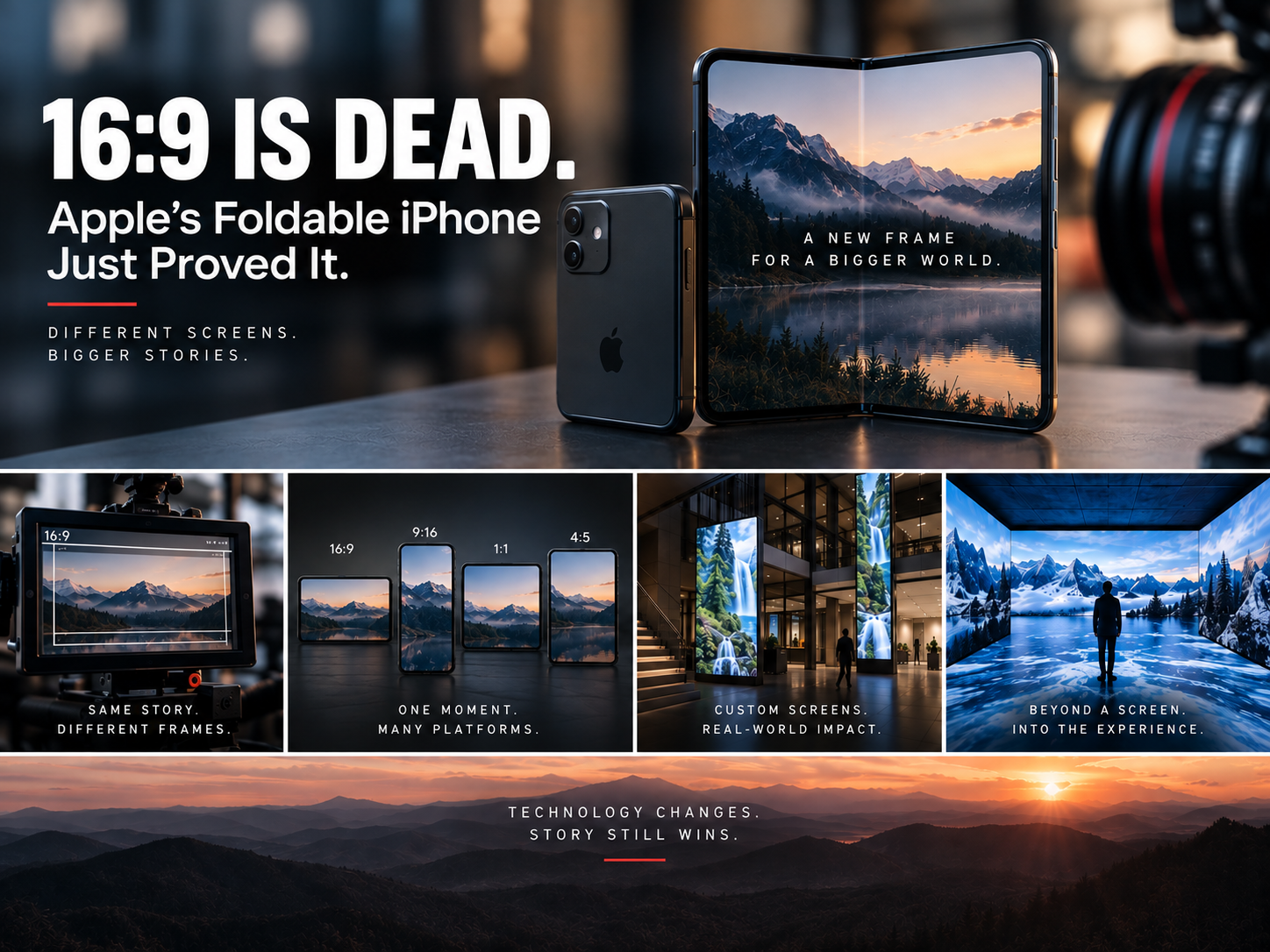
Apple’s foldable iPhone adds another screen shape to consider. For someone buying a phone, that’s an interesting new feature. For our team who spends every day creating images, it raises a different question:
What exactly are we shooting for anymore?
Understanding All Frames
An aspect ratio is simply the relationship between the width and height of an image. It sounds technical, but it determines the canvas we have to tell a story. Change that ratio and the composition changes with it. Some common aspect ratios we utilize are:
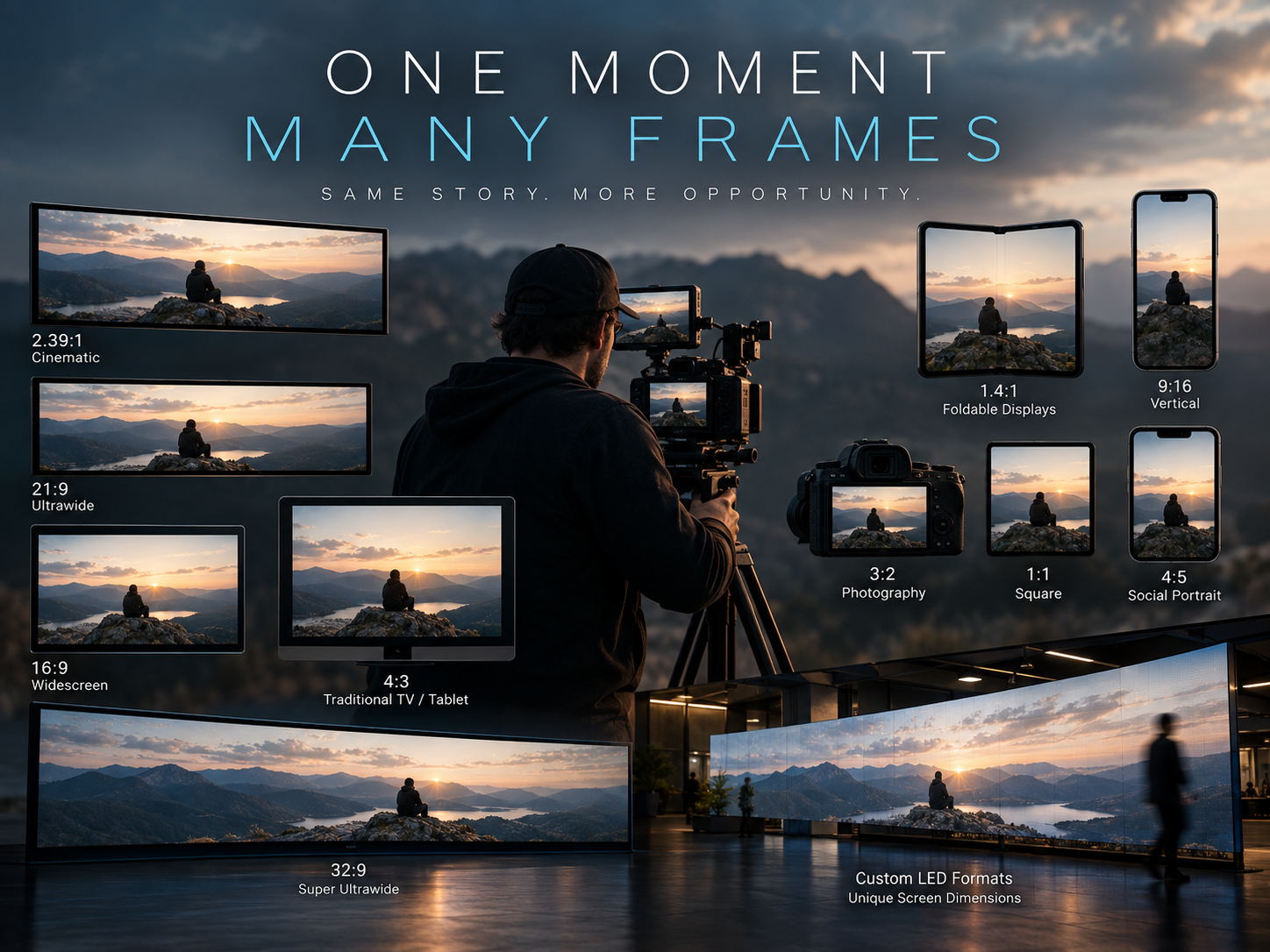
2.39:1 Cinematic Widescreen: The ultra-wide theatrical frame associated with feature films and cinematic storytelling.
21:9 Ultrawide: An increasingly common panoramic format for displays and immersive environments.
16:9 Widescreen: Still the workhorse for television, YouTube, websites, presentations and traditional digital video.
3:2 Photography: Important because we’re often capturing still photography alongside motion.
Approximately 1.4:1 Foldable Displays: A much squarer viewing experience than traditional widescreen.
4:3 Traditional Television and Tablet: An older standard that has found new life on tablets and as an intentional creative choice.
1:1 Square: Still useful across social media and digital advertising.
4:5 Social Portrait: A taller format designed to occupy more space in a mobile feed.
9:16 Vertical: Instagram Reels, TikTok, YouTube Shorts and much of what we watch on our phones.
32:9 Super Ultrawide: An extremely wide canvas increasingly relevant to large-scale displays.
Custom LED Formats: LED walls, ribbons, multi-panel installations, event screens and digital signage can have completely unique pixel dimensions.
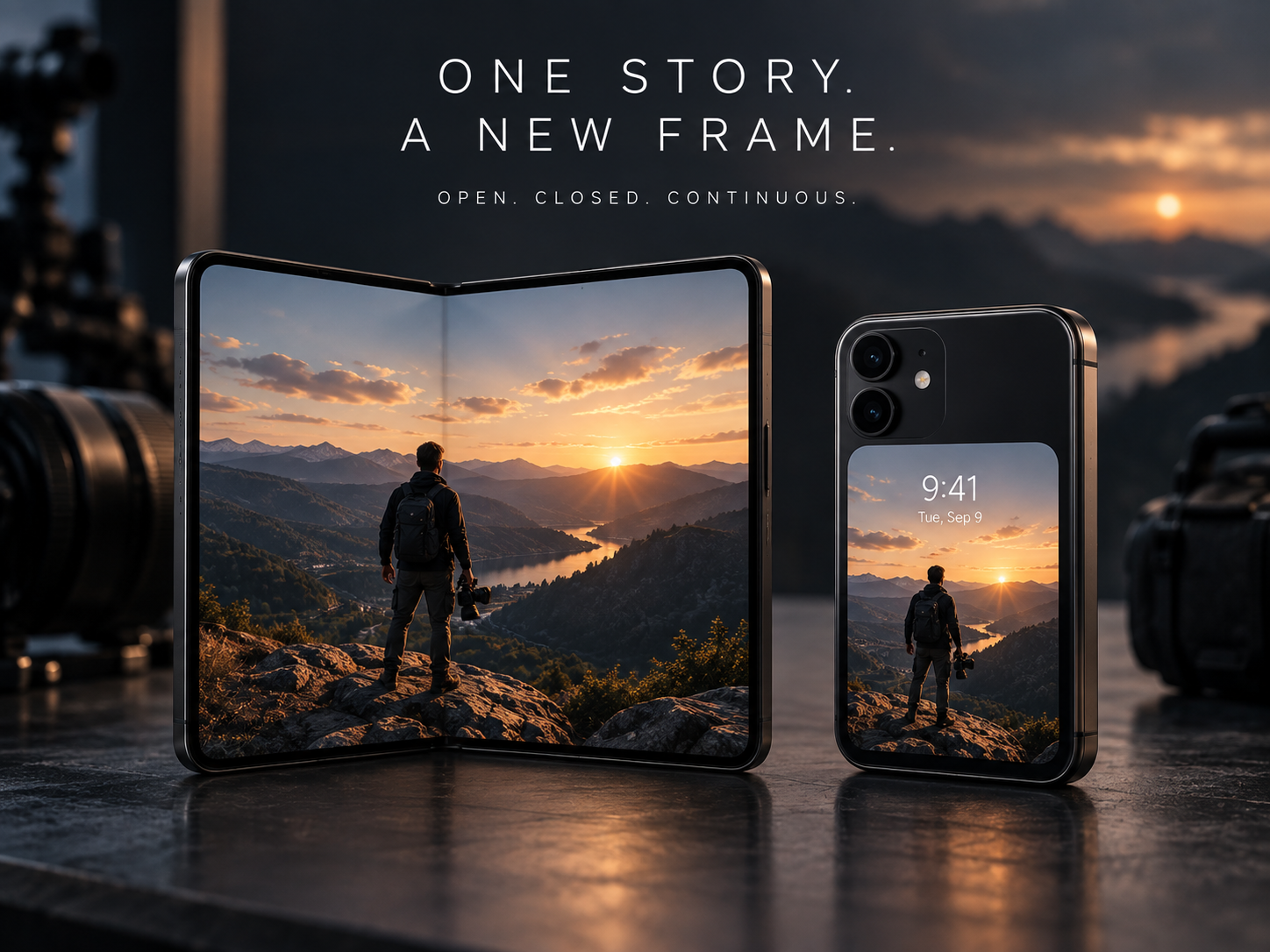
A foldable phone is interesting because it reinforces something we’ve been seeing for years. We’re no longer making a horizontal film and then creating a vertical version. The same story might be watched on a television, phone, social feed, LED wall, or an entirely immersive environment.
We’re Not Shooting One Film Anymore
This has become very real in the work we do at Two Doors Down Productions. We might go into a shoot knowing the main deliverable is a two-minute brand film, but that’s rarely where it ends. The client may also need social content, vertical edits, photography, event content, and shorter versions for different platforms.
That changes how we approach a shoot. We can look through the monitor and love a wide 16:9 composition. But we also have to consider what happens when our editor is asked to turn that shot into 9:16. Maybe the person intentionally placed on the edge of the frame disappears. Maybe the environment we spent an hour lighting is gone. Maybe that beautiful gimbal move no longer works because we're only seeing the center of the image.
The answer isn't to make our work less cinematic. It’s to think further ahead.
Beyond the Traditional Screen
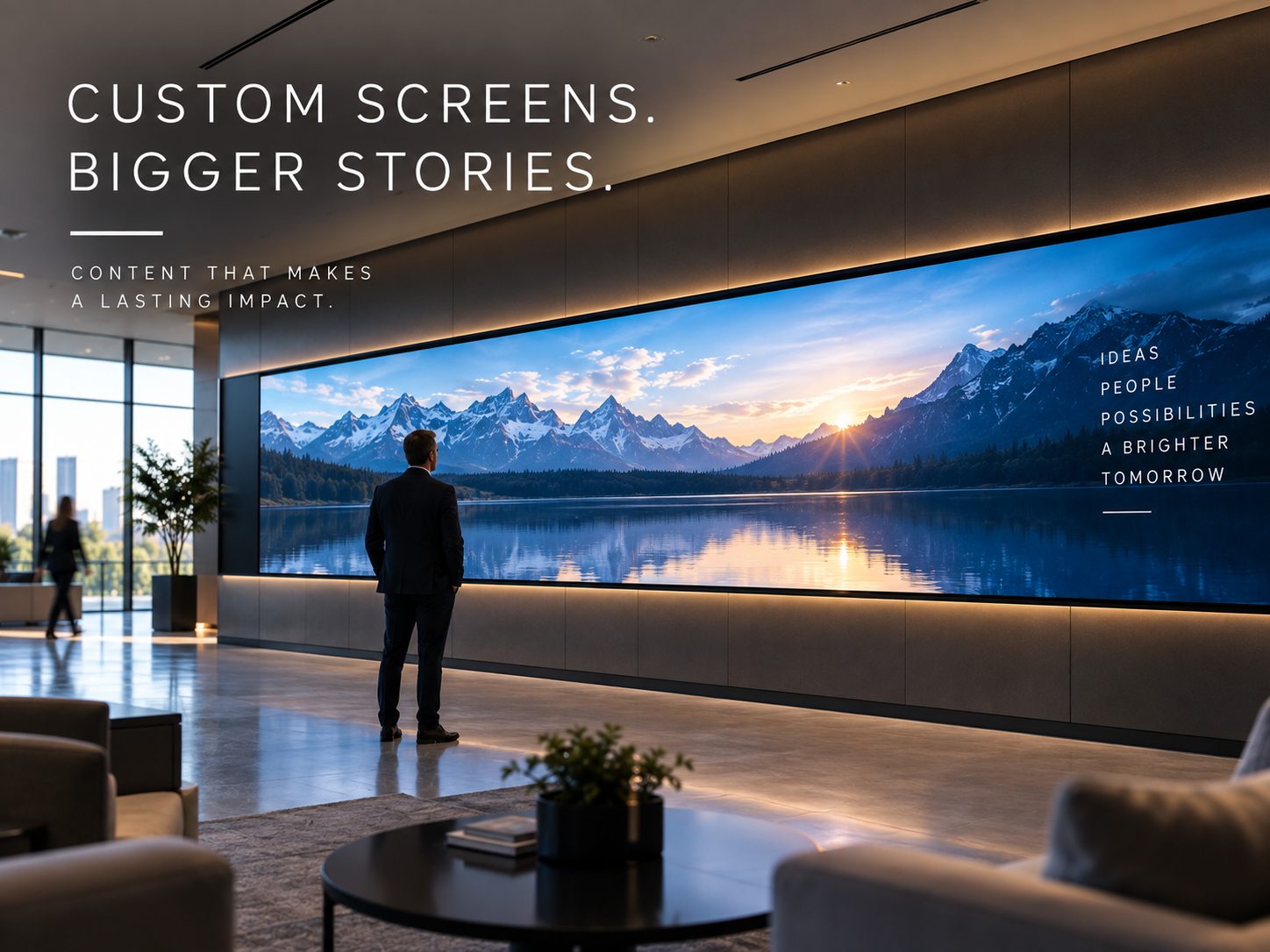
We’re already experiencing this with our clients. For one client, we produce and develop visual content for unique LED displays installed across three floors of their office space. These aren’t traditional television screens, and they don't necessarily conform to the aspect ratios we normally think about. The architecture itself helps determine the canvas.
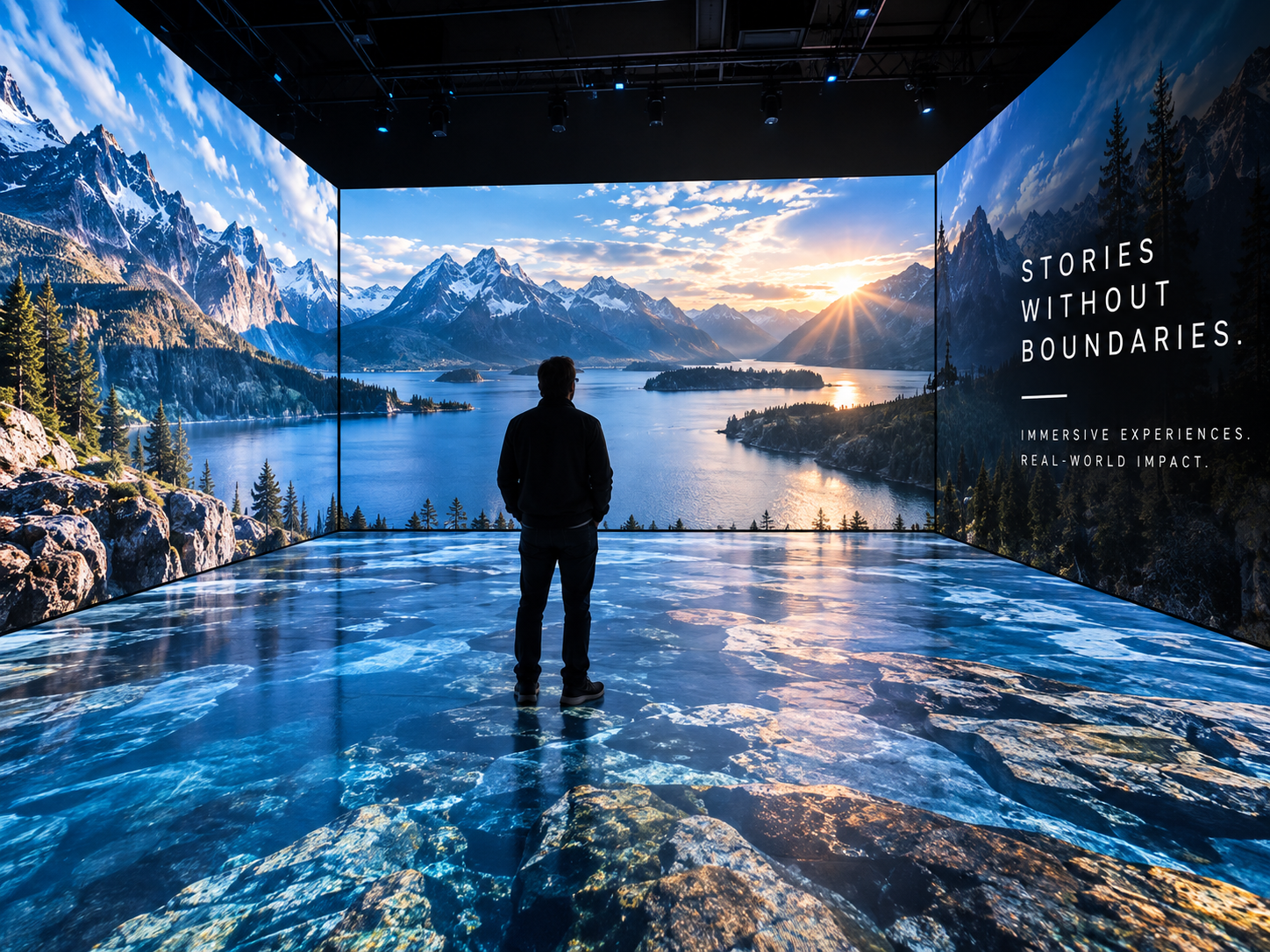
Before creating the content, we have to understand the exact pixel dimensions and consider composition, movement, graphics, and where people will physically be standing when they experience it.
For another client, we took that idea even further. They sponsor an experience at a museum and wanted to make that experience portable so it could travel on the road. We developed an immersive environment using three LED walls and an LED floor, essentially surrounding the audience with moving imagery.
There wasn't one frame anymore. We had to think about how an image traveled from one wall to another, what happened when it continued onto the floor, where someone's eyes would naturally go and how all four surfaces worked together as a single experience.
That project changed the way I think about aspect ratios. Sometimes the question isn't whether something should be 16:9, 9:16 ,or 4:5. Sometimes there really isn't a traditional aspect ratio at all.
We’re not simply creating content for a screen. We’re creating content for a space.
Give the Editor Options
This is also why we try to give our editors options. Get the beautiful wide shot, then move in. Capture the detail. Change the composition. When it makes sense, capture something specifically for vertical.
It's also one reason we believe strongly in high-quality acquisition. We shoot with cinema cameras and prime lenses because we want the image to look beautiful, but resolution also gives us flexibility. It provides room to reposition an interview, create a vertical crop, or develop multiple compositions from the same footage.
We’ve started thinking about resolution as creative real estate.
One Shoot. Many Screens.
For brands, we believe this requires a change in thinking. Instead of making one video and asking afterward, “Can you give us some social cutdowns?”, we would rather have that conversation before we arrive on set.
What content ecosystem can we create from this shoot?
That question changes the production. Now we're intentionally thinking about the main film, social, vertical, photography, events, and even custom displays, all while we actually have the people, location, crew, and equipment in front of us.
Story Still Wins
With all this talk about screens, resolutions, and aspect ratios, there’s one thing we don't believe will ever change.
Story.
Our job is still to find the human element, earn the trust of the person in front of our cameras, and create an environment where they can forget about the production happening around them. If we capture something honest and tell a story that makes somebody stop long enough to feel something, we've done our job.
Technology will keep changing. Cameras will get better. Platforms will come and go. Screens will fold, stretch across buildings, and sometimes surround us completely.
The frame isn't fixed anymore. The frame has become fluid.
And for us, that's exciting. Because the future isn't 16:9 or 9:16.
It's telling a great story and making sure it works wherever the audience chooses to experience it.